Ways to Keep Your HMDD Sweatpants and Shorts Looking Good for Years
HMDD , standing for Happy Memories Don’t Die— has cultivated a devoted fan base on the back of pieces that feel personal, not disposable. If you own a set of HMDD sweats or shorts, you no doubt already know they’re not the sort of piece you’d want to carelessly wash on high heat. Fabric blends used in streetwear-adjacent brands like HMDDLA tend to be thicker, often fleece-backed or brushed, which means they react in different ways to warmth, tumbling, and drying cycles than a plain cotton shirt. This guide lays out the real-world steps that keep the color, print, and shape of your HMDD pieces intact for years rather than months. It’s all pretty simple, but skipping it is the reason good sweatpants turn into faded, pilled, shapeless ones by the following year.
The Reason Care Habits Count More for HMDD Clothing
Streetwear labels that center on graphic work, embroidery, or puff prints put the bulk of the garment’s value into details that rest on top of the material rather than integrated into the weave. That’s true for much of HMDD’s catalog, and it’s a recurring theme in nearly every hmdd review you’ll find online — people appreciate the look, but they also note how the graphics wear (or don’t) hold up after multiple wash cycles. A cracked logo or a faded design doesn’t just seem shabbier; it changes how the entire garment comes across, turning something that once looked deliberate into something that looks neglected.
Cost is another factor worth considering. Elevated sweatpants and shorts from brands branding themselves as best hmdd clothing picks aren’t inexpensive factory-line staples — they’re priced like a long-term investment, which means the cost-per-wear hmdd t shirts only pays off if the garment holds up for 50, 100, or 150 wears. A $10 pair of gym shorts can be thrown in the wash without care for a year and it barely matters. A heavier, detailed pair of HMDD shorts is a different calculation entirely.
When exposed to warmth, fleece and brushed-back fabrics — found in many of HMDD’s sweatpant styles — behave differently than ordinary jersey cotton. Warmth poses the greatest risk to fleece integrity — it breaks down the microfibers that form that soft brushed texture, flattening it permanently. Once that happens, no amount of careful washing brings it back. Which means the routines you form now, from the very first laundering, dictate how the garment ages for the rest of its life.
HMDD Sweatpants Washing: The Basics You Need
Chilly water is essential for any piece featuring a printed or embroidered graphic. Water exceeding 86°F (30°C) speeds up color transfer and breaks down the glue layer beneath screen prints, which is the reason you end up with flaking, cracked graphics within 10–15 washes. Opt for cold water or, at the very most, a lukewarm cycle.
Reverse every pair so it’s inside-out before placing it in the machine. This single step minimizes surface friction on graphics and stitched details by shielding the outer surface from scraping against zippers, drawstrings, or other pieces in the batch. The whole thing takes five seconds and it’s the most overlooked step in the full garment-care process.
A mild, dye-free detergent should be used rather than one with brightening agents or strong fragrance additives, as these additives build up over time in fleece fibers and dull the original color—this is especially true for darker HMDD colorways like black, charcoal, and olive. A quarter-cup of a gentle liquid detergent is usually enough for a single pair of sweatpants; more isn’t better here.
Forgo fabric softener entirely. That may seem counterintuitive for snug fleece, but softener coats fibres in a wax-like coating that diminishes breathability and, over 20-30 washes, makes brushed fleece end up tangled and compressed rather than plush. For those seeking long-term plushness, a reduced spin speed (600-800 RPM) does more good than any fabric conditioner ever will.
Launder similar colors together and avoid overloading the washer — a drum loaded beyond 75% of its capacity means garments are unable to shift freely, leading to more friction and pilling. The best approach, for a single pair of HMDD sweatpants or shorts, is washing with 3-4 other comparably weighted items.
Tumble-Drying and Air-Drying: Where The Majority of Wear-and-Tear Really Occurs
If washing is where mistakes accumulate slowly, drying is where damage happens fast. High-heat tumble drying is responsible for the majority of shrinkage complaints across fleece and heavyweight cotton blends, and it’s very likely the single biggest factor separating a pair of HMDD sweatpants that lasts three years from one that’s unwearable after eight months.
For best results, flat air drying is the preferred method. Because hanging it up lets the weight of wet fabric stretch out elastic waistband or leg cuffs, setting the garment flat rather than hanging it prevents this distortion — an issue that’s especially pronounced with wet fleece, able to holding up to 3 times its own weight in water before dripping starts.
If a dryer is unavoidable, use the lowest heat setting available and remove the garment while it’s still slightly damp, then let it finish air drying. This cuts total heat exposure by roughly half compared to running a full high-heat cycle, and it meaningfully reduces pilling on brushed interiors.
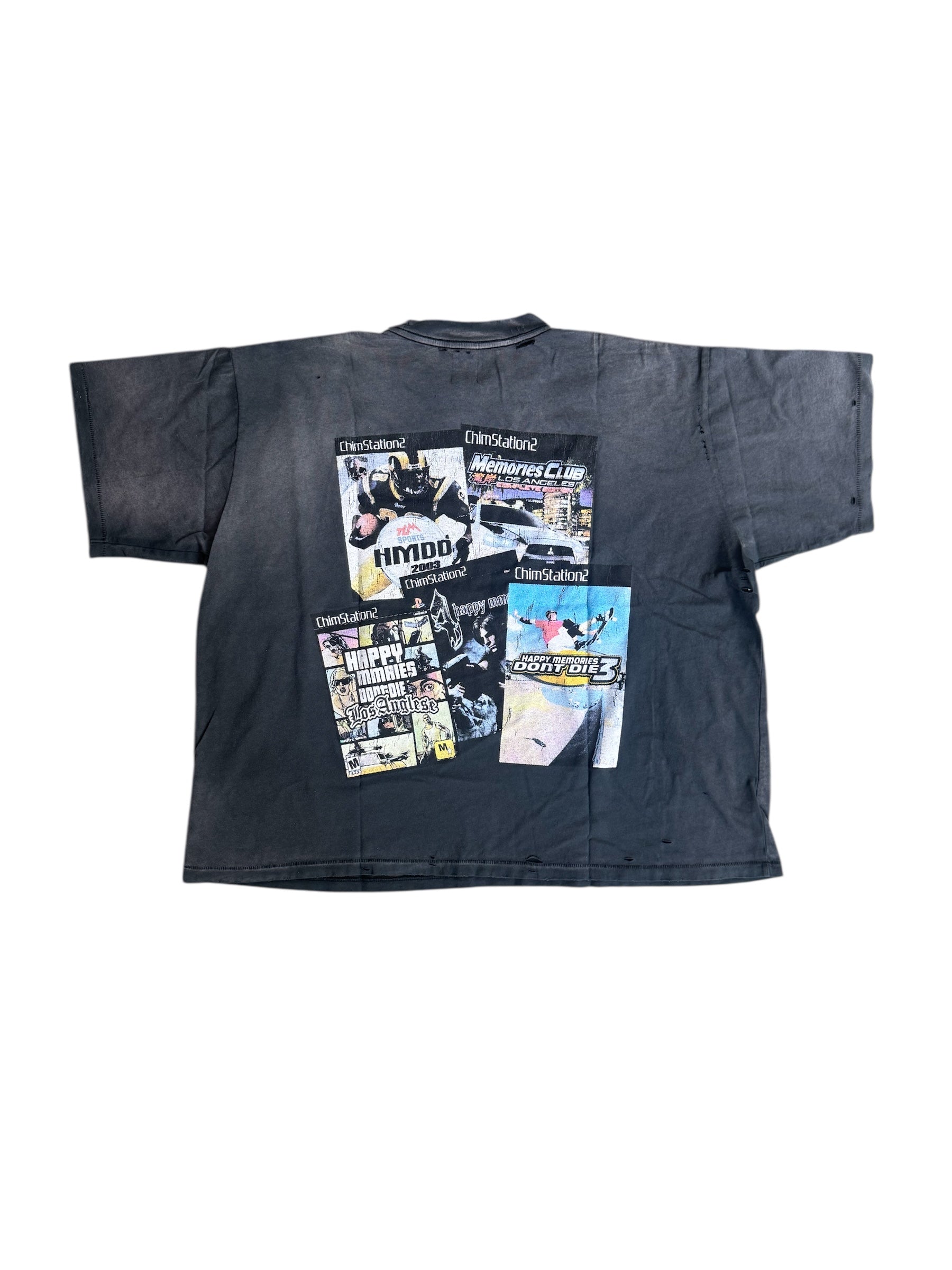
Don’t ever air-dry sweatpants or shorts with a printed graphic print-side down on a heater or radiator. Prolonged, concentrated heat above 122°F (50°C) is all it takes to weaken the bond of plastisol-based prints to the point where the design can lift off and stick onto whatever surface they’re touching, resulting in irreversible damage to the artwork.
Everyday Habits and Upkeep
How you store HMDD clothing in between wear cycles is nearly as important as how you wash it. Opting for folded storage over hanging works best for heavyweight sweatpants and shorts, since suspending heavy fleece from a waistband clip can leave lasting stretch marks at the hang point after just a few weeks.
Because UV exposure is a gradual but genuine cause of color fading, garments should be stored away from direct sun during storage; deeper-toned pieces especially can noticeably fade after only a few months on a sunlit shelf or in a car.
Cycle through your pairs. Given that fabric needs downtime, reaching for that one pair of shorts or sweatpants repeatedly stops the material from regaining its shape, and damage builds faster at stress points such as the knees and the seam at the inner thigh. Keeping two or three pairs swapped in and out routinely, as opposed to wearing just one piece all the time, can nearly double the working lifespan of each garment.
Tackle stains right away rather than letting them set through a full wear cycle. A stain addressed within the first hour comes out with a gentle soap and cold-water rinse in most cases, whereas the same stain left for 24 hours often needs a pretreatment step plus hotter water that risks damaging the print.
Speedy Breakdown: Healthy Habits vs. Habits That Shorten Lifespan
| Care Step | Best Practice | Typical Slip-Up |
|---|---|---|
| Wash Water Temp | Under 86°F (30°C) and cold | Washing hot, over 104°F (40°C) |
| Garment orientation | Inside out | Print facing outward, right side out |
| Detergent | Mild, dye-free liquid | Strong powder formula containing brighteners |
| Drying Technique | Flat air-drying | Full drying via high-heat tumble cycle |
| Storage | Folded and shielded from sunlight | Near a window, on a clip hanger |
| Wearing Habit | Alternating among 2-3 pairs | Daily wear of one pair without resting it |
What’s In Store for Those Who Own HMDD in 2026
The secondhand streetwear resale scene has expanded quickly, and items that hold their shape and color simply command a price for more. A well-maintained pair of HMDD sweatpants can retain a noticeably higher resale percentage of original price than a neglected one, particularly when the graphic or embroidery is still sharp. That’s a real financial reason to take five extra minutes per wash cycle seriously.
It’s also worth noting that as HMDD’s catalog has broadened, the spread of fabric thicknesses and textures has expanded too, so it’s wise to review any care label sewn into your specific piece instead of assuming every item behaves identically. A thick fleece short paired with a lighter, mesh-lined short from that same range can have varying washing thresholds even if they look similar on the rack.
When you get down to it, looking after HMDD garments has less to do with overprotecting them and more to do with matching your wash-and-dry habits to the real fabric in question. Washing cold, turning items inside out, using low or no dryer heat, and storing pieces sensibly handle the lion’s share of what helps keep sweatpants and shorts holding up well. Stick to these steps and the phrase « happy memories don’t die » ends up applying to the item itself, not just the idea — not just the sentiment behind the name.